
How To Easily Download MetaTrader 5 On Different Devices?
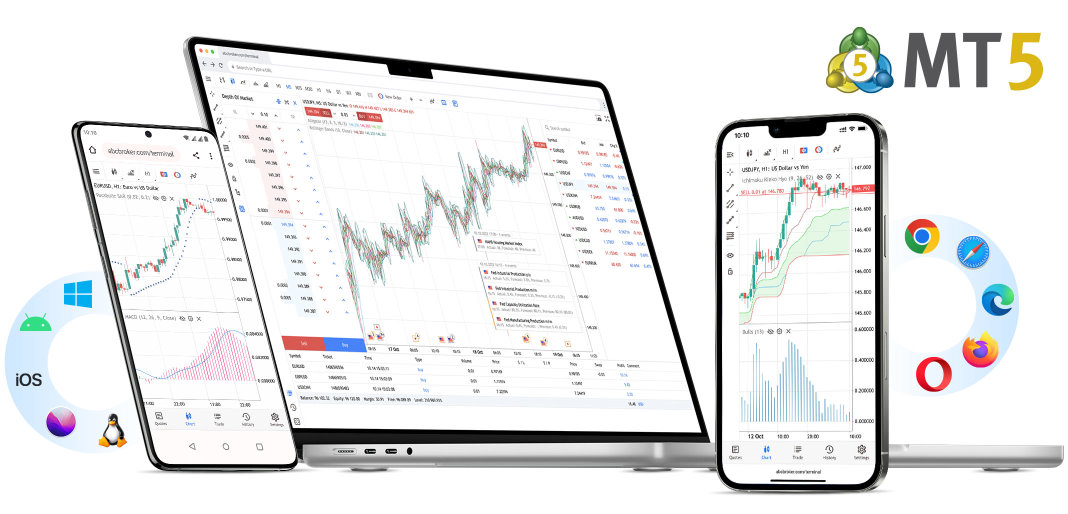
For those who are planning to step into the world of online trading should surely consider MetaTrader 5, which is a cutting-edge platform that empowers traders with its advanced features and user-friendly interface. Whether you’re a seasoned trader or a novice, learning how to download MetaTrader 5 on various devices is the first step towards unlocking endless possibilities in the financial markets. In this comprehensive guide, we will walk you through the simple and hassle-free process of obtaining MetaTrader 5 on your desktop computer, laptop or smartphone. You can surely look forward to a smooth trading journey by following the steps for easily acquiring this powerful trading platform on different devices.
Facts about MetaTrader 5 and MT5 Trading
Before we get into the process of MetaTrader 5 download and installation on different devices, we want beginner traders to have a better understanding of this sophisticated software solution and the scope of MT5 trading which we have covered in a simple and straightforward manner with some precise points. Here More
Note: The exact steps may vary slightly depending on the version of MetaTrader 5 you are downloading and your computer’s settings. After this you can open a new forex demo account and login to start trading. Please note that the steps may vary slightly depending on the source from which you download MetaTrader 5 but general steps remain the same. So, these were the simple steps for downloading and installing the free and powerful MT5 platform on your desktop systems and smart phones. It is great that MT5 is compatible with a bunch of different devices as it allows each and every trader to access the platform and explore its features with greater ease and convenience. This is a wonderful opportunity for traders who wish to explore multiple asset classes and modern trading techniques on MetaTrader 5 platform.
MetaTrader 5 Download for Windows in Simple Steps
MetaTrader 5 Download for MAC in Simple Steps
MetaTrader 5 Download for Iphone Users
MetaTrader 5 Download for Android Users
Conclusion
- wpzoom_is_featured: 0
- wpzoom_is_breaking: 0
- wpzoom_show_media: 0
Ways To Make Profits With Halal Forex Trading : Islamic Forex Accounts

In recent years, the concept of Halal Forex Trading has gained significant traction among people seeking to align their trading activities with Islamic principles. Islamic Forex accounts, also known as Halal Forex accounts, provide a viable avenue for Muslims to participate in the foreign exchange market while adhering to Shariah law. This groundbreaking approach was well-received by Muslim traders around the world as it ensures that trading activities are conducted in a morally and ethically permissible manner as per their faith. In this article, we delve into the various ways individuals can make profits through Halal Forex Trading, emphasising the importance of adherence to Islamic principles and how you can get into it with ease.
Halal Forex Trading and Why is It Relevant?
Halal Forex Trading offers a viable solution for Muslims who seek to engage in currency trading while upholding their religious beliefs. It provides a framework that prohibits interest-based transactions, promotes transparency, and allows for participation in the dynamic forex market. Firstly, one of the fundamental aspects of Halal Forex Trading is the prohibition of Riba, which refers to the charging or payment of interest. In Islamic finance, earning or paying interest is strictly forbidden as it is considered exploitative and unethical. Here More
Hence, halal Forex Trading allows traders to engage in currency exchange without incurring interest charges. Instead, traders focus on leveraging exchange rate fluctuations to make a profit, adhering to the principles of fairness and justice which they are expected to follow as per the teachings of Quran. Another key feature of Halal Forex Trading is the requirement for transactions to be transparent and free from uncertainty (gharar). According to Islamic principles, both parties involved in a transaction should have a clear understanding of the terms, conditions, and subject matter of the trade. This aspect ensures that Halal Forex Trading promotes fairness and eliminates speculation, which is deemed unacceptable. The first and foremost thing that a trader needs to do for ensuring Halal trading practices is opening an Islamic forex trading account. Because a regular or normal trading account will not be ideal for a Muslim trader due to a number of reasons. That is why many top brokers have started to offer Islamic forex accounts to make their platforms more inclusive and favourable for Muslim traders. Islamic Forex accounts, also known as Sharia-compliant Forex accounts and Swap-free forex accounts, are specialised trading accounts designed to adhere to the principles of Islamic finance that we mentioned above. They are more or less similar to regular trading accounts in case of most trading conditions but at the same time they are exclusive for Muslim traders who wish to engage in Halal forex trading. One key difference between Islamic Forex accounts and regular trading accounts is the prohibition of charging or paying interest, also known as Riba. In Islamic finance, earning interest is considered Haram and is strictly prohibited. In regular trading accounts, interest may be charged on leveraged positions or held overnight, but in Islamic Forex accounts, such practices are not allowed. Instead, Islamic Forex accounts will be charging some other fees to cover the cost of keeping a trade position open overnight. To ensure compliance with Islamic principles, brokers offering Islamic Forex accounts may also undergo rigorous scrutiny and obtain certification from Islamic financial authorities. They are obliged to provide specialised account features like swaps-free trading, where positions can be held indefinitely without incurring interest charges. Basically, opening an Islamic forex account allows Muslim traders to navigate the Forex market while adhering to their religious beliefs. Muslim traders seeking to participate in Forex trading must find Sharia-compliant brokers that offer Halal trading accounts. These accounts typically have higher costs compared to conventional trading accounts. The first aspect that affects the cost of Halal Forex trading is that you will have to pay some fees to compensate for the swap-free status. The fees can be more or less depending on the broker you choose for halal forex trading. Another cost is the absence of interest-based leverage. While leverage is a common tool used in Forex trading to amplify potential profits, it often involves the payment or accrual of interest. In Halal Forex trading, leverage must be interest-free, which limits the available options and potentially reduces the leverage ratios offered by brokers. Consequently, traders may need to commit more of their own capital to open positions, which can increase the cost of trading. Another factor that affects the cost of Halal Forex trading is the availability and quality of Sharia-compliant trading opportunities. Due to the specific requirements of Halal trading, not all currency pairs or financial instruments are permissible for Muslim traders. This limitation reduces the range of available investment options, potentially limiting diversification opportunities and increasing trading costs. Additionally, brokers that specialise in Halal Forex trading may charge higher fees or spreads for providing the necessary compliance and oversight. Firstly, you need to research and identify reputable Islamic forex brokers that offer swap-free accounts. Look for brokers that have a strong reputation and are regulated by recognized financial authorities. Read reviews and compare the features and trading conditions offered by different brokers to find the one that suits your needs. Once you’ve chosen a broker, you’ll need to open an account. The account opening process is usually straightforward and similar to opening a regular forex trading account. You’ll need to provide the necessary identification documents and complete the required forms. During this process, make sure to select the option for a swap-free or Islamic account. After your account is open, you can start trading using the Islamic account. With a swap-free account, instead of earning or paying interest on positions held overnight, brokers typically charge a fixed administrative fee or widen the spreads slightly to compensate for the interest charges. It’s important to understand the specific terms and conditions associated with your Islamic account, including any additional fees or restrictions that may apply. By following these steps, you can open a swap-free forex account with an Islamic forex broker and engage in forex trading while adhering to Islamic finance principles. Choosing the right broker for your Islamic account is important to ensure a smooth Halal trading experience. To sum it up, signing up for an Islamic forex account is the best way to find profitable opportunities as a Muslim forex trader. Continuously educate yourself about Islamic finance principles and seek advice from knowledgeable scholars or Islamic finance experts. Remember to seek blessings and make sincere intentions in your trading activities, aligning them with Islamic ethical and moral values. This way you can find success in Islamic trading. What Are Islamic Forex Accounts and How is It Different From Regular Trading Accounts?
The Cost of Halal Forex Trading
How to Open Swap-free Forex Accounts With Islamic Forex Brokers?
Tips for Trading on Islamic Forex Accounts- Go Swap-free
Conclusion
- wpzoom_is_featured: 0
- wpzoom_is_breaking: 0
- wpzoom_show_media: 0
Trading Calculators And Its Types

In the thrilling realm of forex trading, success hinges on making well-informed decisions. One tool that amplifies decision-making prowess is the trading calculator. This article will delve into the different types of forex trading calculators. We’ll explore the day trading tax calculator, forex trading calculator, leverage trading calculator, and trading profit calculator forex. Along the way, we’ll unravel valuable tips and tricks to optimize their usage, enabling you to navigate the forex market with confidence and precision.
Trading Calculators in Forex Trading: A Glimpse Into Accuracy
In the fast-paced world of forex trading, precision is paramount. Trading calculators serve as invaluable companions, ensuring accuracy in crucial calculations. Whether it’s position sizing, risk assessment, profit estimation, or tax obligations, trading calculators streamline complex computations, enabling traders to make sound decisions with confidence and efficiency. Here More
Types of Forex Trading Calculators:
Tips and Tricks to Utilize Forex Trading Calculators:
- wpzoom_is_featured: 0
- wpzoom_is_breaking: 0
- wpzoom_show_media: 0
Transform Your Forex Trading Strategy with These Comprehensive Calculators
Introduction
The process of forex trading is a complex procedure which requires traders to take an informed decision that is based on analysis of the market and risk management and optimization of strategy. To aid traders in making these choices it is recommended that there is a range of highly-technical trading instruments and tools for purchase. These tools allow traders to evaluate market patterns, estimate the potential losses and profits, and effectively manage risk. In this article we will discuss the significance of trading tools for forex trading and give an overview of different kinds of tools that are available on the market.
Explain the importance of Tools for Trading in Forex Trading
Trading tools are crucial for traders since they offer valuable information about the market, and help traders make educated decisions, and effectively manage risk. Without these instruments, traders would be forced to depend on their intuition and experience and could be prone to risk and result in poor trading decision-making. Trading tools can assist traders find profitable opportunities, handle their trades in a way that is efficient in addition to optimize your trading strategies. Here More
Tools for trading play an essential part within the trading process since they assist traders make informed choices using market analysis and risk management and optimization of strategy. They can assist traders discover profitable opportunities, handle their trades efficiently as well as optimize and optimize their trading strategies. With the help of trading software, investors are able to minimize their risk and maximize their earnings. Tools for trading are software applications that aid traders analyse market trends, determine the potential profit as well as losses, and manage risks efficiently. They are indispensable to traders because they offer valuable information about market trends and assist traders to make informed choices and effectively manage risk. Tools for trading can assist traders find lucrative opportunities, handle their trades efficiently in addition to optimize the effectiveness of their trading strategies. There are a variety of trading instruments that are on the market, such as: There is many range of trading instruments and calculators that are frequently used in the field which include: The pip calculator is a device that aids traders in calculating the value of a pip within their currency of base. Pips are the smallest units of measurement used in forex trading, and they reflect the difference in value of two currencies. Pip calculators can aid traders in calculating the possible profits and losses from a trade in relation to the amount of pip lost or gained. For forex trading, pips serve as the primary elements of price movements. These are among the most compact units of measurement that measure the fluctuations between the values of currencies. Consider, for instance, the currency pair EUR/USD trading at 1.1000 then changes to 1.1001. This seemingly insignificant shift represents the change is just one pip. Although this may seem minor the pip is of major significance when it comes to trading on the forex market. Pips offer traders the ability to quantify the fluctuations in prices. They permit traders to determine how much change in exchange rates has occurred between two currencies regardless of whether it’s euro versus or against the US dollar or another currency pair. The ability to quantify the rate of change in pips is crucial for a number of reasons. First of all, pips aid in the analysis of potential gains and losses that could be incurred in forex trading. When knowing the number of pips that are gained or lost in a transaction traders can estimate the financial consequences of their trades. The calculation is based on things like the size of the trade and the size of the lot. This means that traders are able to make informed choices about whether to enter or exit trades as well as setting take-profit and stop-loss orders and reducing risk. Making use of a pip calculator in a professional manner is a crucial ability for forex traders looking to control their trades and evaluate possible outcomes with precision. To make the most from this instrument, forex traders should follow a simple procedure. First, they enter the essential information into the calculator for pip that includes the currency pair with which they are trading in, the value of their transaction, and the exchange rate currently. The choice of a currency pair is vital since it decides the currency used in calculating the pips. For instance, when trading the EUR/USD pair the calculation of pips is done by that currency’s base, usually the local currency. Then, traders define the size of the trade, informing the amount or the number in units trading and can range from micro-lots up to standard lots. The last input is the exchange rate currently in effect, which is the current market price of the currency pair chosen. When this information is input, the calculator for pip begins to work. It quickly calculates what the worth of each single pip in the base currency of the trader, basically revealing the value of every pip movement. Additionally the pip calculator takes one step further by providing estimates of possible losses and profits with the trade, based on the number of pips that were made or lost. This is a crucial feature for traders to assess the risk-to-reward ratio and take an informed decision. A pip calculator makes complex calculations simpler making it easier for traders to determine the viability of their trades, establish limits for take-profit and stop-loss and manage their risk exposure better in the frantic market that is forex trading. It’s a valuable instrument in the arsenal of every serious forex trader. In this case, for example If a trader purchases one lot of EUR/USD for 1.1000 and then the price increases to 1.1100 it is an increase of 100 pips. If the currency of the trader is USD The pip value is $10. So, the expected profit from the trade is $1,000 (100 pip multiplied by $10). This is a step-by-step outline of this tutorial – Potential Profit = 100 pips x $10 per pip = $1,000 profit In this case that trader purchased one unit of EUR/USD for 1.1000 and then sold it for 1.1100 the trader would have earned 100 pip which could result in a profit of $1000. This profit is made possible by the favourable movement in the exchange rate. Additionally, it demonstrates the importance of understanding the pips involved for forex trading for calculating potential profits and losses with precision. Loss and profit loss are fundamental concepts in trading because they are the possible benefits and losses of trading. Profit is the sum of money the trader earns from the trade, while loss represents the sum of money that a trader loses when he trades. The profit calculator is a useful tool for all traders, offering an easy and effective method to determine the likely effects of a transaction. It is especially useful when it comes to forex trading, where precise calculations can make a major difference to the bottom line of a trader. We’ll take a look at how profit calculators function and their essential function in the process of making decisions of traders. For instance for example, if a trader purchases one lot of EUR/USD at 1.1000 and then sells it at 1.1100 then the profit is $1,000 (100 pip x 10). If the trader decides to sell one lot of EUR/USD for 1.1000 and then purchases it at 1.0900 and then sells it again at 1.0900, the loss will be $1000 (100 pip x 10). Here’s the summary – Scenario 1: Buying EUR/USD In this case the trader begins by purchasing one lot of EUR/USD for the rate of 1.1000. This is equivalent to buying 100,000 euros at a price that is 1.1000 US dollars per euro. Now let’s look at exactly how profit will be determined: The trader sells the same lot of EUR/USD for an end-of-day rate of 1.1100. That means they’re trading their 100,000 euro for an exchange cost in the range of 1.1100 US dollars per euro. The variation between the prices of entry and exit is 1.1100 1.1000 1.1000 = 0.0100 100 pip. The term “pip” can be described as the least measurement of price change within the forex market, and is usually the fourth decimal position in the majority of currencies. In this instance it’s the difference between 1.1000 and 1.1100. To determine how much profit to calculate in US dollars to calculate the profit in dollars, we divide the amount of pip earned (100 pip) with the amount of every pip. Each pip’s value is contingent on the size of trade. For typical lots, one pip typically is worth $10. For this particular trade: Profit = 100 pips x $10 per pip = $1,000 profit. Scenario 2: Selling EUR/USD In this situation the trader starts with selling 1 lot of EUR/USD for an initial rate of 1.1000. That means they’re selling 100,000 euros at an exchange cost in the range of 1.1000 US dollars per euro. Now we will look at what the loss can be calculated. The trader then buys back the exact same amount of EUR/USD for an exit cost of 1.0900. That means they’re buying 100,000 euros at a price of 1.0900 US dollars per euro. The difference in the price of entry and exit are 1.1000 * 1.0900 = 0.0100 100 pip. To determine how much loss of US dollars, divide the number of pips lost (100 pip) by the amount of each pip which is $10 for standard lot. Also, in this case: Loss = 100 pips x $10 per pip = $1,000 loss. In both scenarios, the trader is affected by changes in the exchange rate by 100 pips and results in either $1000 profit or a loss depending on whether they purchased or traded this currency pairing. This illustration illustrates the basic idea that governs profit as well as loss when it comes to forex trading, where even tiny fluctuations in exchange rates could cause significant financial consequences and highlight the significance for risk management and carefully planned trading strategies. Risk management is vital in trading because it assists traders effectively manage their risks and limit their losses. Without effective risk management traders may suffer significant losses when they trade. In the tumultuous market of forex trading the risk management is crucial which is why the risk management tools are essential security measures for traders. These tools, such as take-profit orders, stop-loss order and trailing stop orders, form the foundation of successful strategies to reduce risk. Tools for market analysis and research are made to assist traders to analyze market trends, and make educated trading choices. They include analysis tools for technical issues as well as fundamental analysis tools as well as news feeds. Backtesting is an essential procedure that traders utilize to test the efficacy for your trading strategies. It involves the careful evaluation of the trading method employing historic market data to determine how the strategy might perform under different circumstances. This process yields useful figures that aid in assessing the strategy’s effectiveness. Backtesting is an essential aspect in the development of a reliable and well-rounded trading strategy. Backtesting is fundamentally an automated way for investors to use their time machines that allows them to revisit the past market events and test their strategies in an environment that is controlled. In this way traders will be able to gain numerous valuable insights. The main purpose behind backtesting is to offer an objective, data-driven evaluation of a strategy’s effectiveness. It tackles crucial questions such as how this strategy would perform in the past scenarios? What kind of profit or losses could it generate? How would it compare against a buy-and-hold strategy? With quantifiable results backtesting provides traders with deep insight into what they are able to do and how. trading strategies. Backtesting is an essential tool to refine trading rules, improving variables, and discovering issues prior to taking the plunge and committing real funds to markets. It allows traders to modify their strategies according to their own goals in terms of risk tolerance, financial goals and constantly changing market dynamics. Backtesting functions to bridge the theory and application, supplying traders with the opportunity to study historical data and to adapt to ever-changing market conditions and make informed choices. Through integrating backtesting into their trading procedures, traders are able to dramatically increase their odds of success in the ever-changing market of financial markets, putting them on the road to becoming skilled trading professionals who are profitable. Backtesting tools are a great way for traders to examine as well as optimize the effectiveness of their trading strategies. They allow traders to test their strategies based on previous data and then make adjustments based upon the results. Through such tools, traders will be able to detect the patterns or trends which could aid future trading decisions. Backtesting can aid traders in understanding the effectiveness of their strategy and if it could have been profitable in the past. Here’s a step-by step explanation of the way backtesting tools function and the importance of them: Traders can utilize trading tools to create sophisticated trading strategies. With backtesting tools allows traders to examine their strategies and optimize their strategies in order to find profitable opportunities. For instance, traders can employ technical analysis tools to find patterns and trends within the market and utilize this data to create sophisticated trading strategies. With the help of tools for risk management techniques, traders are able to effectively manage their risk and limit the risk of losing money. When deciding on trading instruments, traders must take into consideration their trading style, their experience budget, as well as compatibility. The tools they choose should fit their needs and budget. Certain tools are expensive and traders must consider the cost prior to purchasing. It is also important to select tools that work to their trading platform The selection of the appropriate trading tools is a crucial choice for traders and must be thought-through. Many factors are at the equation when making this decision and each one of them can greatly impact the success of a trader in general trading experience. Traders can personalize their trading toolkit according to their trading preferences by choosing tools that fit their trading strategy. For instance when a trader is an experienced scalper, they might require tools that enable the trader to exit and enter trades swiftly. If the market participant is also a trader who trades swing they might require tools to assist them in identifying patterns and trends in the market. Tools for trading are crucial that are essential to forex traders. They allow traders to make educated decisions to manage risks efficiently, as well as optimize trading techniques. Knowing and using these tools will greatly improve the ability of traders to navigate the ebb and flow of the forex market confidence and accuracy. https://www.zulutrade.com/trading-tools A brief overview of the significance of Tools for Trading Tools to the Trading Process
Understanding the basics of trading tools
What are trading Tools and why are they important for traders?
Different types of trading tools are readily available in the market
Trading Tools Overview
A Guide to a Variety of Trading tools and calculators commonly used in the business
Pip Calculator
Explanation of What Pips are and the significance of their existence
How can you utilize Pip Calculator to the Best of its Ability?
Examples of pip Calculations
Profit Calculator
Understanding Profit and Loss when trading
A Complete Guide to using the Profit Calculator
Calculation of potential profits and Losses
Illustrations of Examples of Profit Calculations

Risk Management Tools
Discussion about The Importance of Risk Management in Trading
An overview of the Risk Management Instruments (e.g., Stop-loss, Take-profit orders)
Tools for Market Analysis and Research
Utilizing a variety of research tools for traders
The Backtesting Process and Strategy Optimization
Backtesting is a fundamental aspect of trading and plays a function in trading
Utilizing Trading Tools to Test Strategies Optimization and Testing
Advanced Strategies for Trading
Strategies to utilize trading tools to create sophisticated trading strategies.
Selecting the Best Trade Tools to Use
Things to consider when choosing Tools for Trading
How can you customize your Trading Toolkit based on your Style of Trading?

Important Takeaways
References
https://www.forbes.com/sites/investor-hub/article/what-is-forex-and-should-it-be-part-of-your-investment-strategy/?sh=24a492ce3c00
https://fortune.com/2020/09/20/inside-the-weird-new-world-of-social-forex-trading-where-you-sign-up-friends-and-some-report-risky-red-flags-for-investors/
https://beststocks.com/white-label-forex-solution-pros-and-cons/
https://www.theguardian.com/business/2015/may/20/what-is-forex-and-why-does-it-matter
https://www.economist.com/finance-and-economics/2013/10/12/the-fx-is-in
http://techbullion.com/want-to-trade-forex-like-a-pro-use-these-mt4-mt5-shortcuts/
https://www.bankrate.com/investing/mistakes-to-avoid-when-trading-options/#not-having-a-trading-strategy
https://www.thestreet.com/markets/currencies/5-big-forex-mistakes-small-investors-make-13610250
https://www.newsmax.com/FastFeatures/best-currency-trading-systembroker-currency-forex-tradingcurrency-forex-online-tradingcurrency-trading-account/2010/09/22/id/371202/
https://scalar.lehigh.edu/finance/what-is-the-best-method-for-forex-trading-analysis
https://www.news24.com/fin24/the-myths-and-truth-about-forex-trading-20170723-2
https://ajmi.stamford.edu/index.php/ajmi/article/view/103
https://www.zulutrade.com/trading-tools/profit-calculator
https://www.investopedia.com/learn-how-to-trade-the-market-in-5-steps-4692230
https://www.businessinsider.com/personal-finance/what-is-forex?IR=T
https://markets.businessinsider.com/news/stocks/top-5-best-forex-brokers-of-2021-tu-research-1030098101
https://altcoininvestor.com/forex-returns-calculator/
https://www.finance-monthly.com/2021/08/10-tips-to-become-a-better-forex-trader/
https://www.financialexpress.com/archive/the-demand-for-forex-trading-talent-is-increasing/1232350/
https://pr.newsmax.com/article/Tips-to-Start-Trading-Forex-for-New-Traders?storyId=61f3fd426670b35869919a96
https://www.fool.com/terms/f/forex-trading-robot/
https://blogs.cornell.edu/learning/why-trade-in-forex-and-how-to-become-a-successful-forex-trader/
https://www.nasdaq.com/articles/one-most-reliable-trading-tools-signaling-caution-2013-09-13
https://seekingalpha.com/instablog/46612006-johnny-fr/5640967-learning-simple-day-trading-strategies-for-big-profits
https://www.huffpost.com/entry/risk-and-reward-ratio-of_b_10249724
https://www.worldfinance.com/markets/bringing-quality-of-service-to-the-forex-market
https://www.academia.edu/41543825/BEGINNERS_GUIDE_TO_FOREX_TRADING
https://africa.businessinsider.com/local/markets/forex-trading-for-beginners-the-essentials/szz62d7
https://cryptomode.com/how-to-open-and-manage-a-forex-islamic-account/
https://www.investors.com/promoted-content/moomoo-technologies-inc/one-of-the-leading-stock-trading-apps-with-powerful-tools/
https://moneyweek.com/13127/an-important-investment-tool-11014
https://smallinvestmentideas.com/best-mt4-brokers/
https://www.benzinga.com/money/forex-trading-tools
https://www.economywatch.com/trading/trading-platforms
https://www.kiplinger.com/investing/in-forex-trading-do-chess-players-have-an-edge
https://fxview.com/trading-calculators
https://disruptmagazine.com/how-to-use-a-trading-calculator-guide-for-beginners/
https://www.cnbc.com/2015/01/16/forex-leverage-how-it-works-why-its-dangerous.html?&qsearchterm=forex
https://www.thebalancemoney.com/tools-and-services-needed-for-day-trading-1031037
https://beamstart.com/news/forex-demo-account-trading
https://www.oanda.com/currency-converter/en/?from=EUR&to=USD&amount=1
https://www.financialsamurai.com/to-margin-trade-or-not-risks-and-benefits-of-taking-on-leverage/
https://trading-education.com/10-best-forex-trading-platforms-for-mac–windows-in-2023
https://tradingbrokers.com/how-does-a-pip-calculator-simplify-your-forex-trading/
http://cs230.stanford.edu/projects_fall_2020/reports/55813822.pdf
https://www.investing.com/brokers/copy-trading/
- wpzoom_is_featured: 0
- wpzoom_is_breaking: 0
- wpzoom_show_media: 0
How To Use Fx Margin Calculator To Calculate Trading Margin?
While getting into forex trading, you need a clear idea about the concept of margin and margin calculations. It is crucial in planning and managing your trades. Beginners might be a bit intimidated and overwhelmed by the complex calculation process. Thankfully, there is a simple yet powerful tool called fx margin calculator to help you. But how can you use an Fx margin calculator in trading? Why is it relevant? Keep reading to get some valuable insights.
What is the forex margin?
Margin is simply the amount of trading capital needed to place a trade, and free margin is the balance left in your account after placing trades. While placing trades, you need to maintain the margin level stated by your broker, and an Fx margin calculator can be used to estimate the same. Here More
What is a margin call or margin level?
Margin call is a situation when your trading account balance falls below the minimum margin requirement specified by your broker. In this case, the broker notifies you about the same, and you will have to deposit additional funds to keep the trade running, or the positions will get closed automatically.
Now, margin levels are actually a metric to determine the financial health of a trading account. It is the ratio of your capital against the margin already used for trading, and it is expressed in percentage.
Difference between Stop-Out Level and Stop-Loss Order
The stop-out level is a point at which the trade positions are auto-liquidated (closed) by the broker due to inadequate margin in the account. This is done when the margin-to-equity ratio reaches 50%, and traders describe this scenario as being stopped out.
However, a stop-loss order is different as the trader places it to protect their account against losses when the market starts moving against them, resulting in a losing trade. Stop loss is placed below the entry price in a trade, and the position will be automatically closed when the price touches the set SL.
How can you avoid a margin call?
The best way to avoid a margin call is to calculate the required margin in advance, and the Fx margin calculator will come in handy. Paying attention to risk management and placing an SL in every trade is also important to avoid excess losses that trigger a margin call.
Why are margin calculations relevant?
Margin calculations are relevant because you won’t be able to place a trade unless you meet the margin requirement. The concept of margin is especially important while trading with leverage, as they are interconnected. The amount that you wish to risk for a trade determines your margin requirement. Leverage amplifies the risk, and thus Fx margin calculators consider leverage as a key metric in calculations.
Working of Fx margin calculator
Fx margin calculator works using an algorithm to perform the calculations right away, and the results are always accurate as long as you provide correct data. You have to specify the trading instrument, account base currency, trade size, and leverage availed. The Fx margin calculator will instantly display the required margin in your base currency based on a real-time exchange rate.
What is a maintenance margin?
It is the amount of margin that a trader has to keep in their account. Brokers will specify the margin traders should keep in their accounts to protect themselves against counterparty risk while they are offering leverage.
Rewards and Risks of Margin Trading
Margin trading is done by using leverage to open bigger positions with lesser margins, and the higher profit potential is the primary reward you get with it. It allows you to grow your account while using a lesser amount of funds for trading. The risk of margin trading is you will encounter bigger losses when a trade doesn’t work in your favour. You might also encounter a margin call situation when this happens. Thus, you need sound risk management to secure your capital.
Final Thoughts
Certainly, margin calculations are an inseparable part of forex trading. Using an Fx margin calculator, you can make quick and informed trading decisions with greater ease.
- wpzoom_is_featured: 0
- wpzoom_is_breaking: 0
- wpzoom_show_media: 0
Understanding Forex Trading Basics
Introduction
When we imagine bustling markets, pictures of bustling stock markets brimming with traders yelling buy and sale orders are likely to be the first thoughts that come to mind. However, there’s a second market that is virtual and huge which is larger than stock exchanges in terms of trading volume and volume: The Forex market. It’s short for “foreign exchange” . Forex trading is the financial centre of the world and its daily volume surpasses $5 trillion. This guide dives into the complexities of Forex trading by revealing its importance, the mechanics behind it and the potential that it provides traders.
At its heart, Forex trading is the process of purchasing one currency and then selling another. It operates as a decentralised market, which means there’s no one-stop exchange location where trades occur. Instead, everything takes place electronically and businesses, banks and individuals playing their part from different parts of the globe and it’s a 24 hour market.
You may be wondering why Forex trading has such a high significance. One of the main reasons is its function in facilitating the international flow of trade and investment. Imagine a scenario like this: a company located in the USA wants to import electronic products from Japan. As this American company earns profits in US dollars (USD) however, the Japanese manufacturer would prefer to receive payment by the Japanese yen (JPY). This is the place where Forex is a factor. American businesses can purchase Japanese yen with their US dollars, which allows the exchange. This process of currency conversion, which is pivotal in global business operations, is proof of the enduring value that is the Forex market. Here More
However, in addition to aiding businesses in their international endeavours and assisting them in their international ventures, it is also a source of help for individuals. Forex market is full of opportunities for individual traders. In contrast to stock markets that are influenced through the performances of specific firms and their performance, Forex markets are influenced by the performance of individual companies. Forex marketplace is affected by macroeconomic variables as well as geopolitical developments and interest rates, among others. Forex traders study these variables and determine the way they impact the currency’s value. If they think that the US dollar will appreciate against the yen for instance it is possible to buy USD/JPY. If they are right they could profit from the movement of the currency.
This guide will take you deeper into the world of Forex trading that covers pivotal issues such as:
- Trading Accounts: Exploring various kinds of accounts to traders, and highlighting differences between live and demo accounts.
- Trading Platforms: We will discuss the characteristics of these platforms as well as their various types and what makes them stand out in a crowded market.
- Trading Dynamics: Define trading at its root by exploring the many trading types and introducing various strategies that are commonly used.
- Starting with Forex: A guide for novice traders, starting with the initial step of education to the first step of live trading.
- Managed Forex accounts: Introduction LAMM, PAMM and MAM. We shed light on the different types of accounts and how to select between them.
- Forex Brokerage: Defines the role of brokerages, understanding their importance and helping those who are looking to set up their own business.
When the guide is finished at the end of the guide, readers will have a comprehensive knowledge of Forex trading as well as the skills to navigate the vast and complex waters. No matter if you’re an avid observer or a beginner trader or a veteran trader There’s always something to be learned in the ever-changing realm of Forex.
Trading Accounts
The realm of Forex trading is huge and diverse offering traders at all levels, beginning with novices who are trying their first steps into the world of finance to veteran traders with years of expertise. The key to this flexibility lies in the various types of accounts offered by brokers. Each type of account is created to satisfy the particular preferences and requirements of different traders. Let’s look into the specifics of these types of accounts and learn about their unique characteristics, advantages as well as potential disadvantages.
1. Standard Account
The Standard Account can be described as the most commonly used kind of account offered by brokers, and is generally geared toward the intermediate and advanced trader. Let’s take a look at:
Large Lot: The most important characteristic that differentiates a normal account is its size. In Forex trading”lot” refers to the amount of currency you’re trading “lot” is the quantity of currency units you’re purchasing or selling. In a typical account, a”lot” typically corresponds to 100,000 units of your base currency.
Who are they intended for? Due to the volume of a single lot in a typical account, it will require greater capital expenditure. This type of account is typically most popular with investors who feel comfortable placing bets and taking risks with larger sums of money.
2. Mini Account
In order to move away from the standard account, we are now using this Mini Account.
Lot Size The amount of the lot is 10,000 units, which includes base currency that is one-tenth the size of a normal account.
Who can it be used for? The mini account is ideal for novices or those with a small trading capital. The smaller size of the lot is a way to reduce risk and exposure and allows traders to get an understanding about the markets without placing too much at risk.
3. Micro Account
If you’re looking to get started at a lower level with a smaller investment, you can use the Micro Account as an ideal option.
With a lot size of just 1000 units of base currency, the micro account really is a true micro account.
Who can it be used for? This account type is great for those who want to dive into Forex trading. With a minimal amount of capital required, it is the perfect opportunity for novice traders to try real trading with a minimal risk.
The differences between Demo as well as Live Account
Another important difference that is crucial to note in Forex trading is the distinction between Demo and live accounts. Each has a distinct purpose and comes with its own advantages and disadvantages.
1. Demo Account
A Demo Account is similar to the sandbox for traders.
The account type utilises virtual money, which allows traders to practise trading without the risk of real capital. Everything else from market conditions to price changes, is simulated by the real trading environment.
Pros: The biggest benefit of using a demo account is an opportunity to practise without risk. It allows traders to familiarise themselves in trading on the trading platform, test out strategies and experience the feel of market dynamics without worry of losing money.
Pros: Although it’s an excellent tool for training, a demo account frequently does not recreate the psychological and emotional stress of live trading. Real gains and losses trigger emotions that can affect trading decisions. This is a factor that is not present from demo trading.
2. Live Account
The real action occurs in a live Account.
Features The name implies Live accounts involve real cash. Profits and losses directly affect the trader’s capital.
Possibilities for real gains is the main attraction of a live account. Furthermore, trading in a live environment helps improve a trader’s mental and emotional resilience, which is a crucial aspect for the long-term viability of trading.
Cons Pros: Alongside real gains comes real risk. Investors could lose a portion or even their entire investments, so it is vital to implement strategies for risk management strategies.
Trading Platform
In its essence it is a trading platform that can be described as a complex piece of software that facilitates the process of selling and buying instruments on the financial markets. Beyond execution the trader is provided with an array of tools to keep track of the market, analyse their positions, as well as control their investment portfolio. It’s basically the primary way for traders to interact with the market, allowing them to make informed decisions to execute trades, as well as keep track of their positions.
Types of trading platforms:
The development of technology has created different kinds of trading platforms that cater to different needs and preferences.
Web-based Platforms These platforms are accessible online and can be accessible directly via web browsers such as Chrome, Firefox, or Safari. The advantage is that users are able to log on from any computer, without having to install specialised software. But, the performance could depend on the quality and speed of the internet connection.
Downloadable Platforms: Often praised for their stability and strength platforms that are downloadable can be described as software apps that traders download directly on their computers. Direct installation usually permits quicker execution of trades and gives a greater variety of features and tools. A popular example can be found in that of the MetaTrader 4 (MT4) platform.
Mobile Platforms The widespread availability of tablets and smartphones, trading has become mobile. Mobile platforms are specifically designed to work with these gadgets, which allows investors to handle their trading on the go. These apps typically mirror the functions of desktop or web counterparts, but are optimised for smaller screens as well as touch controls.
What are the characteristics of the Good Trading Platform:
The market is brimming with a variety of different trading platforms, however not all of them are made equal. What sets the top ones from the rest:
User-friendly: In the highly-pressure market of trading the simplicity of a platform is crucial. A good platform is user-friendly, organised, well-organised and simple to use, so that traders are able to complete tasks quickly and without a lot of confusion.
Tools for Technical Analysis Traders heavily rely on technical analysis in order to make educated decisions. Good platforms offer a range of tools to help which include advanced charting features as well as the range of indicators for technical analysis (like Moving Averages Bollinger Bands, as well as MACD) as well as drawing instruments for trend lines or levels of support and resistance.
Real-Time Data In the speed-of-light world of trading the need for real-time data is vital. Even a delay of just a few seconds could significantly influence a trader’s choice. Therefore, the best platforms offer real-time pricing, market updates and immediate execution of orders.
Customer Support: Despite the most reliable platforms, problems or questions can pop up. It could be a technical issue or a question about an option, or help with the execution of an order. Fast and timely customer service is vital. The best platforms usually provide support via a variety of channels, including Live chat, emails or via phone. They also ensure that their support staff are competent and efficient.
What is trading?
Forex trading is a highly dynamic field that involves participants in trading and buying of currencies, with the aim of making profit from fluctuation of exchange rates. To navigate through the vast ocean of forex trading efficiently it is vital to grasp the fundamentals of forex trading as well as the various kinds of trading and the strategies traders employ to optimise their choices. Let’s explore these aspects.
In essence, trading is the act of purchasing and selling assets. In the case of forex the assets involved are currencies. Each transaction is basically an exchange, you’re buying one currency and simultaneously selling another.
An example: Let’s consider USD/EUR as a currency pair. If you think that the Euro will appreciate in comparison with that of the US dollar, you’d buy the EUR/USD currency pair. If the Euro increases in value when compared with that of the US dollar, then you may trade the pair to make the profit.
Different types of trading
It’s not a one-size-fits all business. Different traders have various risk tolerances, timing availability and strategies. So, they are involved in different types of trading:
Day Trading: The technique involves opening and closing trades on that same trading day. The aim is to capitalise on the small price fluctuations during the course of the day. For instance, a day trader may purchase the GBP/USD pair around 10 am, and then trade it by 3pm and profit from the intraday fluctuations in price.
The Swing Trade: Swing traders maintain their positions for days or weeks hoping to profit from the short- to medium-term price trends. Example A trader who is a swing thinks the AUD/JPY currency pair will appreciate over the next five trading days because of an announcement on the economy. They could be able to enter into a trade but close the position after one week.
Position Trading Position Trading is a long-term strategy where traders hold their positions for a period of months to years, based on macroeconomic fundamentals that are long-term in nature. For instance, a position trader may decide to buy the USD/CAD pair, hoping that in the next year it will be the case that over time, the US economy will be more successful than the Canadian economy.
Scalping is focused on speed. Scalpers execute a lot of tiny trades during the course of the day hoping to profit from tiny price movements. An example: A scalper may purchase the EUR/GBP currency pair and then sell it in just three minutes, profiting from a slight change in price.
Strategies for Trading
Beyond the different types of trading strategies, they offer the framework or guidelines to help traders make decisions. Here are some strategies that are popular:
Trend Following The name implies the strategy entails trading according to market trend, regardless of whether it’s upward (bullish) as well as downward (bearish). Example: If the longer-term direction of the USD/JPY exchange is upwards, a trends-following trader will seek out opportunities to buy.
Range Trading is when the market goes around without a clear direction and it is prone to oscillate between the support (lower) as well as the resistance (upper) ranges. Range traders buy support at the time of purchase then sell when resistance is reached. For instance, if EUR/CHF has fluctuated in the range of 1.1000 between 1.1000 and 1.1050 for a few weeks and weeks, a range trader could purchase at 1.1000 and then sell it at 1.1050 frequently.
The Breakout trading method involves trading when the price is above a certain threshold (be it resistance, support or some other level) in the hope it will remain in the direction of breakout. For instance, if the GBP/AUD currency pair is hovering just below the resistance level of 1.8000 and then suddenly rises to 1.8050 A breakout trader will interpret this as a signal to purchase expecting a subsequent upward move.
How to Start Trading Forex:
For newcomers taking their first steps, knowing the fundamentals and adhering to a set of guidelines could make the difference between a successful start and an empty bank account. This guide outlines the most important steps and advice for novices.
1. Learn to Know Yourself
Before you dive in the forex market it’s essential to be prepared.
Know the basics:
Forex (also known as currency exchange or foreign exchange. It is a term used to describe trading and buying currencies. The purpose is to predict whether the value of a currency will increase or decrease against a different currency. For example, if you think it is likely that Euro will appreciate when compared to US Dollar, you’d buy the EUR/USD currency pair.
Trading Strategies:
There are many strategies that traders use, ranging from day trading that is the process of trading multiple times in one day, to positions trading that allows traders to trade for several months, or perhaps years. Every strategy needs a distinct approach and knowledge of the market signals.
Market Analysis:
Forex traders typically employ fundamental and technical analysis. Although technical analysis involves analysing price charts and applying measures of statistics to predict the future price movement Fundamental analysis focuses on analysing the economic indicator, current news and events that may influence the value of currencies.
2. Select a reputable Forex Broker
Your broker serves as your access point to forex markets, and therefore choosing a reliable broker is crucial.
Licences and Regulations:
Check your broker’s licence and be regulated by credible financial authorities. For example, brokers who are regulated by organisations such as the US’s Commodity Futures Trading Commission (CFTC) or the UK’s Financial Conduct Authority (FCA) follow strict rules.
Reputation and Reviews:
Forums, online platforms along with social media are filled with other traders’ reviews. While there is no perfect broker however, a series of negative reviews regarding withdrawals, platform outages or unethical practices ought to signal red flags.
Trading Conditions:
Take into consideration the broker’s spreads, leverage and commissions. Leverage is a great way to boost the loss and profits, while narrow spreads can help you save money on a variety of transactions.
3. Start an account for trading account
After you’ve selected an online broker, you’ll have to create an account for trading.
Application Process:
It usually requires the completion of an online form that includes personal information, financial background and trading goals. It’s a legal requirement for brokers to gather the information needed to provide the right services for your specific needs.
Documentation:
Brokers will require certain documents to confirm the identity of you and your address. It is usually a photo ID (like driver’s licence) and a utility invoice as well as a bank statement.
4. Deposit Funds
Once you have your account approved after approval, you’ll need to fund it before you can start trading.
Payment Methods:
Brokers accept a variety of payment options, ranging from credit and debit cards to online payment options such as PayPal and Skrill. Make sure the payment method you select is safe and affordable.
5. Trade Immediately
With money within your accounts, you’re able to trade. But for those who are new to trading it’s best to begin by using the demo account. The simulated environment allows you to trade using virtual money, which allows you to practise without any risk. When you’re confident then you can switch onto live trading.
Tips for Beginning students
When you start this forex journey, remember these essential tips in your the back of your mind:
Start Small:
When you’re a novice one can be tempted to look at the potential for profit and jump into the water with both feet. It’s better to begin small. Make sure you only invest funds that you are able to afford to lose. In the future, as you get more experience, you may think about expanding the stake.
Use Stop Losses:
They are predetermined amounts that a trade can automatically close to avoid any further losses. This is a safeguard to ensure that you don’t risk more than you’re willing for a trade.
Be informed:
The forex market is heavily affected through global developments. It doesn’t matter if it’s an economic announcement or geopolitical tensions or significant news events, staying informed will enable you to make educated decisions.
Be a good steward of your emotions:
Trading can be thrilling however, it’s essential to be neutral. The emotional aspects of trading, such as the desire to chase losses or getting too confident after an influx of wins could undermine your plan. Make sure you follow your trading plan and check it frequently.
Forex Managed Accounts
The lure that is the forex market and its huge volumes and constant flow and ebbs draws a range of players, from experienced traders to those who want to build wealth. While the prospect of profit is appealing, not everyone has the experience, knowledge or the time to make the right trades. Forex-managed accounts are an innovative solution that lets experts be brought in to oversee trading operations. But what exactly are these managed accounts? How do they function and how can one pick the right one? Let’s delve in.
What are Forex-Managed accounts?
Imagine being fascinated by your curiosity about the forex market’s potential for returns, but don’t have the knowledge or the time to invest in trading. This is where forex managed accounts are available. They are investment accounts that are specially designed that have an experienced trader or money manager manage the trading on behalf of the investor. The investor is in charge of their account, but authorises the professional to take trading decisions.
This arrangement offers a number of benefits:
1. Expertise Access:
The world of forex trading is a subject which requires not only knowledge of currencies and global economics, but additionally the ability to make rapid decisions based on numerous variables. The complexities of this field is a challenge for investors who do not have the knowledge or motivation to completely immerse themselves into the subject.
In-depth Knowledge: Through controlled accounts, customers have access to experts who have been in business for years, or even years, studying the intricate details and nuances of trading in the forex market. They have traversed a variety of market cycles that range from bull run to downturns, and have an abundance of knowledge to draw on.
Strategic Trading: Because of their years of expertise, these experts employ advanced trading strategies that are tailored to specific market conditions. They are aware of the complexities of chart patterns, technical analysis along with economic and other indicators. and use their knowledge to make educated trading choices.
2. Time-Efficient:
This forex market, as an open-to-all-hours market, requires continuous vigilance. For many people, particularly those who have full-time jobs or multiple obligations, it’s difficult to maintain the constant concentration that forex trading demands.
Hands-off Approach Managed accounts let investors to relax. They are able to reap the potential gains forex trading offers without being constantly on their computers looking at charts or monitoring economic news. Money managers take care of all aspects of trading logistics.
Peace of Mind: There’s a sense of peace of mind knowing that a professional is in charge of your investments. Instead of juggling the ever-present pressure of knowing whether to buy or sell investors can get on with their routines confident that their accounts are in the hands of a seasoned professional.
3. Diversification:
The fundamental rule in the field of investing is to not place all your eggs in one basket. Diversification, the spreading of investment across various asset classes, is an effective strategy used to control risk.
Expanding Portfolio Horizons Many investors have portfolios that include bonds, stocks as well as real estate, forex remains unexplored for some. Managed accounts provide a smooth access to this area. It lets investors expand their investment choices and add currencies within their portfolio.
Non-Correlation with Traditional Markets One of the advantages that comes with forex can be that it does not always correspond with the traditional bond or stock markets. When there’s a slump in the stock market for instance it’s possible that the forex market could not be affected or offer lucrative opportunities. This is a great protection against risk management for the investor’s entire portfolio.
Different types of accounts that are managed by Forex Types of Forex-Managed Accounts: LAMM, PAMM and MAM
There are a variety of structures available that can be managed each with its own distinct characteristics:
LAMM (Lot Allocation Management Module) LAMM systems the money manager makes orders on their main account. It is often referred to by their master bank account. Client accounts that are linked to this master account receive exactly the same trades. The main difference is that the sizes of trades for each client are calculated proportionally according to their respective size of accounts. For example, if a master account has a capacity to carry out a transaction of 10 lots, and the client account is only half what the account of master is, the client account will be able to execute a trade of five lots.
PAMM (Percentage Allocation Management Module) PAMM (Percentage Allocation Management Module) PAMM system differs from LAMM by the focus upon profit as well as loss allocation. Instead of mirroring transactions, the profits and losses in the PAMM arrangement are divided in accordance with the percentage of equity that each account contributes to. Thus, if the client’s account accounts for 20 percent of the equity pooled by the manager, then any profit or loss from trading transactions will be allocated at 20% to the customer’s account.
MAMM (Multi-Account Manager) MAMM (Multi-Account Manager) MAMM program is one of the more advanced systems that combines features from LAMM as well as PAMM. It allows you to distribute trades in large amounts (like the LAMM system)) or in percentages (like those in PAMM). This is a great system for managers of money who have diverse clients, since it permits custom trade allocations and strategies to specific accounts.
How do you choose a Managed Account?
Selecting the best managed account takes a lot of diligence and knowledge:
Research: Examine the manager’s trading background, strategies along with their overall performances. Past performance does not guarantee future outcomes however, it provides insight into their knowledge and experience in risk management.
Be aware of the risks: Forex trading is inherently dangerous, and there’s no guarantee of profit even with a professional in charge. Make sure you’re at ease with the amount of risk that you’re taking.
Examine fees: Managed accounts generally have fees attached – they might be performance-related costs, management fees, or both. Know the structure of fees in detail and make sure it is in line with industry norms and gives worth for the service offered.
Stay updated: Even when you have a professional managing your trades, you should remain engaged. Review your account’s performance regularly Ask questions and make sure that you are at ease using the trading strategies employed.
The role of the Money Manager in Forex Trading
In the tangled market of forex trading, where market changes occur in a matter of minutes, many investors decide to give their trading tasks to experts known as money managers. They play an essential role in navigating through the confusing routes of forex for their clients. Let’s explore the many facets of their work:
Expertise at Work Money managers have to the table a wealth of experience and a deep understanding of the market. They are familiar with the nuances of forex and utilise different techniques, tools for technical analysis and market information to make well-informed trading decision-making. Their knowledge often surpasses that of an individual retail trader, which makes them indispensable to those with no ability or the time to trade their own.
Research and insight: A major portion of a manager’s work is conducting constant research. They analyse a myriad of data from historical economic trends to geopolitical developments to predict future market trends. Analysing a manager’s previous trading strategies and past history can provide insight into their market knowledge and risk tolerance. It is important to keep in mind that although past performance can give insight, it’s not a reliable indicator of future performance.
Risk Management One of the most important characteristics of a skilled financial manager’s skill is the capacity to manage the risk. Although forex trading has inherent risks an experienced manager will employ strategies to reduce the risk of losses and make maximum gains. They realise that the goal isn’t only profit but also the preservation of capital. Therefore, it’s crucial for investors to determine the risk that an administrator is willing to accept and whether it’s in line with their own risk aversion.
Forex Brokerage
There is a forex market, characterised by its enormous size and constant operations, draws numerous participants. In the middle of these traders and the bigger interbank forex market is that of the forex brokerage. Serving as an intermediary of vital importance and intermediary, a forex brokerage is a way to access this highly competitive market for traders who are retail. Essentially, when individuals are looking to purchase or sell an exchange rate, they do it through a forex brokerage. It sends the trade to a larger provider of liquidity or performs the transaction on its own depending on the business model.
The easy answer is that yes, one can start a forex brokerage. But, opening the brokerage isn’t an easy job. It requires a substantial expenditure of money, an in-depth knowledge of the market and the different regulations and a strong technology infrastructure to facilitate trading operations. It’s an endeavour that requires careful planning with dedicated resources, as well as an approach that is strategic.
Methods to open the doors of a Forex Brokerage:
Decide on the Business Model Brokerages generally operate under two principal models:
Trading Desk (DD) In this case the broker is market maker, offering liquidity to customers. When a client makes an order and the broker is able to be on the other aspect of the trade making money from the spread or, in the case of a client, from their loss. It’s crucial to handle possible conflicts of interest efficiently in this scenario.
1.)Non-Dealing Desk (NDD):
This model is where the broker sends orders from clients straight to providers of liquidity, without interfering with the trade execution. The majority of profits are derived from spreads or commissions but not taking the other direction of the customer.
2.) Find the necessary licence:
It is true that the forex market is regulated heavily in a number of countries, and with a good reason. To protect integrity in the marketplace as well as protect traders, regulators have set up strict standards for the operation of an online brokerage. Licence requirements may differ between different jurisdictions. Common requirements include keeping a sum of money in capital reserves, reporting regular audits, as well as ensuring that the operation is transparent.
3.) Create infrastructure:
Technology is the backbone of forex brokerage. To provide seamless trading experience, brokerages require:
- Trade Platforms: These can be a proprietary software or a popular platform like MT4 or the MT5. Some brokerages also use white-label options, in which they acquire an application from a technology company and market the platform as their own.
- Pay Systems: to ease deposits and withdrawals.
- CRM Systems: Customer Relations Management (CRM) Software to manage interactions with clients and to provide prompt assistance.
- Back Office Systems: For operations and administrative tasks, which include the management of compliance as well as risk management.
4.) Recruitment of staff:
The best team can determine the success or failure of a brokerage. Important personnel are:
Experts in Forex:
- To help guide trading processes and give information.
- Reps for Customer Service: Help clients and address their concerns.
- The Regulatory Compliance Officers ensure that the brokerage complies with the regulations.
IT Professionals to manage technology infrastructure.
5) Promote Your Services:
Once you have an infrastructure set up it is now time to find customers. This includes:
- Branding: Creating a well-known brand that represents trust and experience.
- Digital Marketing: Utilising tools such as SEO, PPC advertising, and social media to connect with potential customers.
Educational Content: Provides webinars, articles and other tutorials that help clients and establish the brokerage as a thought-leader. - Promotions: Attractive deals such as bonuses, promotions or trading competitions to attract new customers.
White-Label Forex Solutions:
If you’re overwhelmed by the technicalities of creating an online brokerage from scratch There’s a solution that is a white label forex solution. This is the process of obtaining a ready-made trading software from a supplier and then advertising it as a brand new. It’s like renting a furnished house instead of building it from scratch.
The advantages of white-label products are:
Here’s how white label forex solutions can provide unbeatable benefits:
- Speed one of the biggest advantages is the speedy market entry. Instead of spending months or years developing a trading platform from scratch up, brokers can utilise white-label options to launch their services in just a fraction of the time. With the majority of the infrastructure set up, it’s only an issue of branding and customising before the platform can be marketed.
- Cost-Effective: Creating the forex trading platform in-house can be expensive and requires hiring testers, developers and other IT staff. In addition, there’s the cost of ongoing updating and maintenance. White-label solutions can eliminate these expenses. Through investing in a ready-made platform, brokerages are able to significantly reduce the initial capital investment and operating costs.
However, brokers should be aware that white-label options could not provide as much customization and the client will be dependent on the tech provider for updates and help.
The Summary of the Key Issues
- Understanding Forex at its heart, forex trading is a complex area where currencies are exchanged and its complexity is created by the interconnectedness of various aspects.
- The need for depth: Dive into forex isn’t just an transaction of selling or buying but requires a thorough knowledge of its many dimensions:
- Trade Accounts: Diverse kinds of accounts are able to meet a variety of trading needs ranging from the novice to the experienced investor. Knowing the best type of account will help set the stage for a trading journey.
- Trading Platforms: They’re not only tools, they’re gateways to the world forex. Their user interface, functionality and reliability are able to significantly influence trading experience.
- Strategies and Methods Strategies and Techniques forex market is ever-changing and traders use an array of strategies. range options of techniques, ranging from short-term scalping to longer-term position trading each one requiring the use of its own set of abilities and understanding.
- Advanced Exploration: Going beyond what is required, forex offers avenues for both active and passive investors:
- Managed Accounts Managed Accounts: Investors trust experts to navigate forex waters for them. Selecting the best management strategy, whether it’s LAMM, PAMM, or MAMM is crucial to align with the goals of investment.
- The process of opening a brokerage is a great opportunity for those who do not want to just trade, but to also facilitate trading. Setting up the foundation of a forex brokerage does not require capital, but also a knowledge of the regulations, infrastructure technology and the dynamics of markets.
Final Thoughts:
Although the forex market can provide lucrative opportunities, it’s also a source of dangers. The right education and continuous learning and a careful approach are essential to successful trading. No matter if you’re trading by yourself or with a team of professionals, staying informed and attentive will always be your greatest friend in the field of forex trading.
References
https://hbr.org/2013/04/which-social-network-makes-you
https://www.sec.gov/answers/forcurr.htm
https://www.refinitiv.com/perspectives/market-insights/covid-19-whats-the-impact-on-forex-trading/
https://fr.tradingview.com/chart/GBPUSD/PgBHdMap/
https://money.cnn.com/data/afterhours/
https://www.fxtradingrevolution.com/forex-blog/beginner-guide-to-metatrader-5-brokers-best-of-2023
https://fxview.com/mt5
https://www.nerdwallet.com/article/investing/forex-trading
https://www.theglobeandmail.com/globe-investor/investment-ideas/are-you-missing-out-on-forex-trading/article545820/
https://www.forbes.com/sites/quora/2018/02/16/how-is-trading-cryptocurrency-different-from-stocks-and-forex-trading/
https://www.foxbusiness.com/markets/nyc-real-estate-market-cheap-dollar-impact
https://academy.binance.com/en/articles/what-is-forex-trading
https://anotes.readthedocs.io/how-to-start-trading-forex-with-robots/
https://corporatefinanceinstitute.com/resources/foreign-exchange/forex-trading/
https://coinmarketcap.com/currencies/luxurious-pro-network-token/
https://www.thebalancemoney.com/forex-vs-stocks-1345042
https://www.theguardian.com/money/2021/jan/28/young-women-of-colour-taking-up-forex-trading-lockdown
https://www.scribd.com/book/472210870/Forex-Trading-Learn-How-to-be-Consistently-Successful-in-Forex-Trading
https://www.tutorialspoint.com/forex_trading/forex_trading_quick_guide.htm
https://www.ibtimes.com/how-trade-forex-market-beginners-these-5-crucial-tips-will-save-you-3048023
https://fxview.com/lp/demo-account
https://www.usatoday.com/story/money/markets/2017/12/11/bitcoin-futures-trading-kick-off-could-signal-digital-currencys-move-mainstream/941668001/
https://www.livemint.com/news/india/rbi-put-out-alert-list-of-illegal-forex-trading-apps-websites-check-full-list-11662770531261.html
https://www.standard.co.uk/esmoney/what-is-forex-trading-b983816.html
https://www.wikihow.com/Trade-Forex
https://www.cryptoninjas.net/2023/06/07/a-beginners-guide-to-forex-demo-account/
https://www.insidermonkey.com/blog/what-are-forex-futures-and-how-do-they-differ-from-normal-forex-trades-1029683/
https://www.accountiod.com/master-mt5-download-and-installation-across-devices/
https://www.bignewsnetwork.com/news/273238908/white-label-forex—a-complete-guide
https://www.inc.com/molly-reynolds/the-jack-of-all-trades-might-just-be-a-master-of-big-picture-thinking.html
https://www.lifehack.org/430400/10-myths-about-forex-trading
https://fortune.com/2020/09/20/inside-the-weird-new-world-of-social-forex-trading-where-you-sign-up-friends-and-some-report-risky-red-flags-for-investors/
https://www.walmart.com/ip/Wiley-Trading-The-Forex-Trading-Course-A-Self-Study-Guide-to-Becoming-a-Successful-Currency-Trader-Edition-2-Paperback-9781118998656/44372062
https://www.independent.co.uk/money/spend-save/personal-finance-scam-banking-bitcoin-cryptocurrency-forex-trading-a8927931.html
https://www.laprogressive.com/successful-forex-trading/
https://www.prnewswire.com/news-releases/invest-ecapitals-introduces-more-forex-trading-pairs-301708101.html
https://www.bigtimedaily.com/a-guide-to-metatrader-5-automated-trading/
https://www.justice.gov/usao-sdny/pr/ceo-cryptocurrency-and-forex-trading-platform-charged-fraudulent-scheme-involving-over
https://www.financial-expert.co.uk/mt5-trading-metatrader-5-for-an-advanced-trading-experience/
https://www.researchgate.net/publication/332684231_FoRex_Trading_Using_Supervised_Machine_Learning
https://smartasset.com/investing/investing-in-currency
- wpzoom_is_featured: 0
- wpzoom_is_breaking: 0
- wpzoom_show_media: 0
